
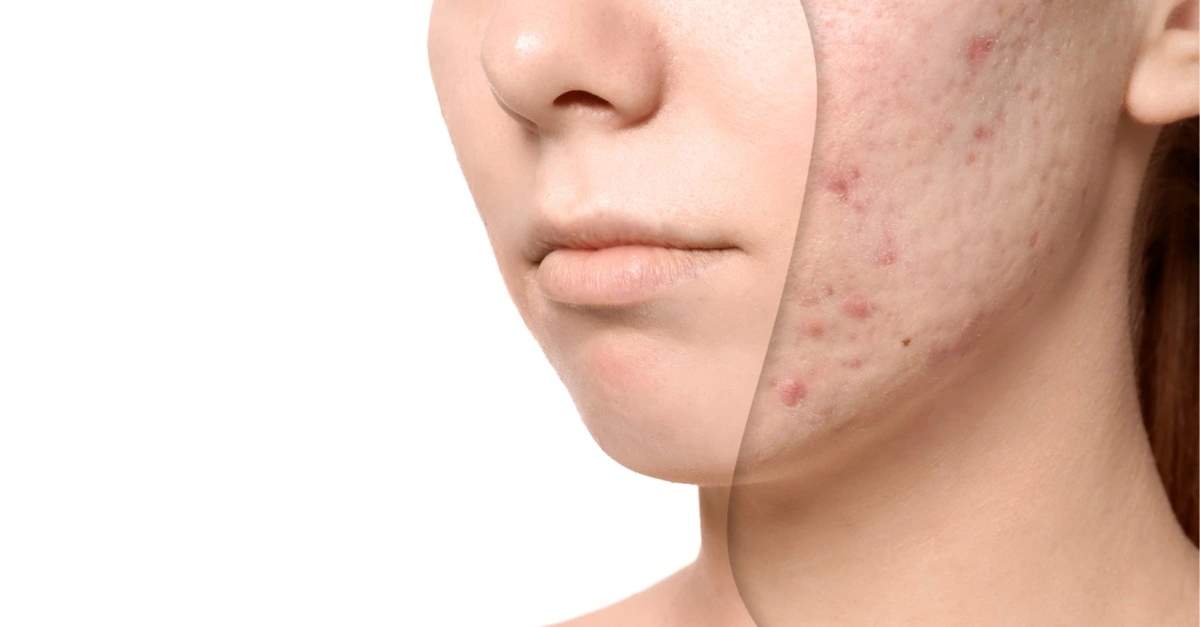
Acne scars are among the most emotionally persistent skin concerns — they outlast the acne itself by years, and they tend to be most visible in the demographic that is already under the most social and professional pressure. At Skinssence Laser & Skincare Clinic in Talwandi, Kota, Dr. Ashima Madan (MBBS, MD, FAM – DJPIMAC, Mumbai) treats acne scarring as one of the clinic's most frequently requested procedure areas — and the most common reason patients arrive with the wrong expectations is that they have chosen or been offered a treatment without a proper assessment of what type of scarring they actually have.
This guide explains the dermatology framework for matching treatment to scar type — the actual clinical reasoning behind why one patient gets Microneedling RF while another gets a chemical peel, and a third gets both. Understanding this helps you arrive at a consultation knowing what questions to ask, and what a realistic treatment plan looks like.
Why treatment choice depends entirely on scar type — and why this step is skipped too often
Acne scars are not a single entity. The term covers at least five structurally distinct types of skin changes that have different underlying tissue architectures and therefore respond differently — sometimes oppositely — to the same treatment. A procedure that produces excellent results in rolling scars can have minimal effect on ice pick scars. A peel that clears post-acne marks efficiently does nothing to address the textural depth of a moderate boxcar scar.
The most common reason patients in Kota undergo multiple failed treatments before arriving at Skinssence is not that the treatments are ineffective — it is that they were selected without a proper scar classification assessment. When a patient says "I've already tried laser and it didn't help my scars," the first question is: what type of scars do you have, and was the laser selected with that type in mind?
Acne scar types — what they are, what causes them, and what treats them
Atrophic scars — the most common category
Atrophic scars are depressed below the surrounding skin surface. They form when the inflammatory process of an acne lesion destroys collagen in the dermis faster than it can be replaced during healing, leaving a permanent deficit in tissue volume. Three sub-types, each with distinct characteristics:
Ice pick scars
Deep, narrow, V-shaped channels extending from the surface down into the dermis. Typically under 2mm wide but can reach several millimetres in depth. Most common on the cheeks. The narrow diameter and steep walls make them the most challenging atrophic scar to treat — surface-level exfoliation and standard Microneedling have limited reach to the base of a true ice pick scar.
Primary treatment: TCA CROSS (chemical reconstruction of skin scars) — a focal high-concentration TCA application specifically to the channel floor, causing controlled collagen stimulation at depth. Followed by Microneedling RF for surface refinement.Boxcar scars
Round or oval depressions with sharply defined, near-vertical walls and a flat base. Wider than ice pick scars, shallower than true ice picks. Shallow boxcar scars (less than 0.5mm depth) respond well to Microneedling RF and chemical peels. Deep boxcar scars (0.5mm or greater) require more aggressive collagen remodelling — fractional laser or multiple MNRF sessions at appropriate depth settings.
Primary treatment: Shallow — Microneedling RF + chemical peels. Deep — fractional laser or aggressive MNRF protocol.Rolling scars
Broader depressions with gently sloped, undulating edges — creating a wave-like surface irregularity rather than discrete punched-out pits. Caused by fibrous bands tethering the deep dermis to the surface, pulling it downward. The wave pattern is most visible in raking light or when the skin is stretched. Rolling scars are the most responsive of the three atrophic types to Microneedling RF because the treatment simultaneously breaks the subsurface fibrous tethering bands (mechanical disruption) and stimulates new collagen to fill the volume deficit.
Primary treatment: Microneedling RF — often produces visible improvement within 3–4 sessions. Combination with PRP or GFC accelerates outcome.Post-inflammatory hyperpigmentation (PIH) — not a scar, but commonly confused with one
PIH — flat dark marks after acne healing
Post-inflammatory hyperpigmentation is not structural scarring — it is pigmentation, not a textural change. The skin surface is flat; only the colour is abnormal. PIH is caused by excess melanin deposition during the inflammatory phase of an acne lesion. It is significantly more common and more persistent in Indian skin (Fitzpatrick III–V) than in lighter skin types because of the higher baseline melanin reactivity. Crucially, PIH can resolve on its own over 6–18 months — but consistent sun protection is essential, since UV exposure will actively deepen and prolong it. This distinction matters because the treatment for PIH (chemical peels, laser toning, topical brightening agents) is completely different from the treatment for textural scarring. Treating PIH with the procedures designed for atrophic scars wastes sessions and budget.
Primary treatment: Chemical peels + laser skin toning + topical brightening protocol + strict SPF. Not MNRF.Hypertrophic and keloid scars — raised rather than depressed
Hypertrophic scars and keloids
Elevated above the skin surface due to excess collagen deposition during healing. More common on the jawline, chest, back, and shoulders than on the face. Hypertrophic scars remain within the original wound boundary; keloids extend beyond it. Both require a fundamentally different approach — treatments that stimulate collagen production (Microneedling RF, fractional laser) are contraindicated for raised scars and can make them significantly worse. Treatment for hypertrophic and keloid acne scars involves intralesional corticosteroid injections, laser-based flattening, and in selected cases, pressure therapy — assessed individually at consultation.
Primary treatment: Intralesional corticosteroid injections ± laser. MNRF and collagen-stimulating procedures are contraindicated.Treatment modalities — what each does and which scar types it suits
| Treatment | Mechanism | Best suited for | Not suited for | Downtime |
|---|---|---|---|---|
| Chemical peels | Controlled acid exfoliation — accelerates cell turnover, reduces surface pigmentation, mild surface textural improvement | PIH (dark marks), mild surface irregularity, skin tone preparation before deeper procedures | Deep atrophic scars, ice pick scars, hypertrophic scars | 3–7 days mild peeling depending on peel depth |
| Microneedling RF (MNRF) | Radiofrequency energy delivered at precisely controlled depth through insulated microneedles — thermal injury zone in the mid-dermis stimulates aggressive collagen remodelling; mechanical disruption of subsurface fibrous bands | Rolling scars (best), shallow-moderate boxcar scars, open pores, skin laxity, combination protocols | Active acne, ice pick scars (primary), hypertrophic or keloid scars | 2–5 days redness and mild swelling; no peeling |
| Standard microneedling (Dermapen) | Mechanical microchannels stimulate superficial collagen production — no RF energy, shallower depth than MNRF | Very mild atrophic scars, PIH support, skin texture maintenance | Moderate-deep atrophic scars (insufficient depth reach), ice pick, hypertrophic | 1–2 days mild redness |
| TCA CROSS | High-concentration TCA applied focally to the base of ice pick scar channels — causes localised collagen stimulation at the scar floor, gradually filling the channel from below | Ice pick scars specifically — the only consistently effective treatment for true ice pick morphology | Rolling scars, boxcar scars, PIH, hypertrophic scars | 5–7 days localised crusting at treated points |
| Laser skin toning (Q-Switch) | Low-fluence laser passes fragment melanin deposits and mildly stimulate collagen — primarily a surface brightening treatment | PIH (dark marks after acne), overall skin tone, mild maintenance | Structural atrophic scarring, deep scars | None — mild transient flushing only |
| MNRF + PRP or GFC combination | Microneedling RF creates channels and thermal collagen stimulus; PRP/GFC growth factors delivered immediately into receptive tissue maximise the collagen regeneration response | Rolling and boxcar scars where faster, more complete collagen response is needed; patients with slower healing baseline | Active infection, hypertrophic scars | 2–5 days — same as MNRF alone |
Why Indian skin requires specifically calibrated protocols
Indian skin (Fitzpatrick III–V, which describes the majority of patients in Kota) has higher baseline melanin content and more reactive melanocytes than lighter skin types. This has two direct implications for acne scar treatment:
The post-inflammatory hyperpigmentation risk — the most common complication of incorrectly applied acne scar treatment
Any procedure that creates controlled injury to skin — Microneedling RF, fractional laser, chemical peels — triggers an inflammatory response. In Fitzpatrick III–V skin, this inflammatory response frequently stimulates excess melanin production, producing post-inflammatory hyperpigmentation (PIH) at the treatment sites — darkening rather than improving the appearance of the treated area.
This is not a rare complication. It is the most common reason patients report that acne scar treatment "made my skin darker" — and in the vast majority of those cases, the cause was aggressive settings, inadequate skin preparation, or treatment performed without consideration of the patient's Fitzpatrick type and baseline melanin reactivity.
- Aggressive MNRF settings on unprepared Fitzpatrick IV skin → PIH at needle points, lasting 4–8 weeks
- Medium-depth chemical peel without prior skin preparation in reactive skin → patchy darkening
- Fractional laser on inadequately assessed skin tone → persistent pigmentation at treated areas
At Skinssence, Dr. Ashima Madan addresses this through pre-treatment skin preparation (topical priming agents that reduce melanin reactivity before the procedure), conservatively calibrated treatment parameters, and post-procedure sun protection protocols. The preparation and aftercare are not optional extras — they are the mechanism by which complications in Indian skin are prevented.
The combination approach — why most patients need more than one modality
Most patients presenting with acne scarring in clinical practice have a combination of scar types simultaneously — rolling scars on the cheeks alongside ice pick scars on the temples, moderate boxcar scars with significant PIH overlying them, or atrophic scarring on a background of continued active acne. A single treatment modality cannot address all of these equally well.
A realistic combination plan for a patient with mixed atrophic scarring and significant PIH at Skinssence might look like this:
Example combination plan — mixed atrophic scarring with PIH (3–6 months)
- Months 1–2: Skin preparation — topical priming to reduce melanin reactivity; active acne controlled with prescription treatment if still present; strict SPF established
- Sessions 1–2: Chemical peels addressing surface PIH and preparing skin for deeper procedures
- Sessions 3–5: Microneedling RF for rolling and shallow boxcar scars; TCA CROSS for any ice pick component if present — same session or adjacent sessions
- Parallel: PRP or GFC added to MNRF sessions to accelerate collagen response
- Between sessions: Laser skin toning (Q-Switch) to continue PIH reduction and maintain surface brightness during the deeper treatment course
- Session 6+: Assessment of response, repeat sessions where required, maintenance planning
This is an illustrative example — the actual plan is designed after clinical scar mapping at consultation. Some patients need fewer steps; some need more. The sequencing is as important as the treatments themselves.
See how each component of this plan works individually: chemical peel treatment in Kota, laser skin toning in Kota, PRP treatment at Skinssence, and GFC treatment in Kota.
Setting realistic expectations — what acne scar treatment achieves
Acne scar treatment produces significant, visible improvement in the vast majority of patients who complete a structured course. It does not, in most cases, produce 100% elimination of scarring. Understanding the difference between what treatment achieves and what it does not is a core part of ethical clinical practice — and it is the conversation Dr. Ashima Madan has with every patient before any procedure begins.
| Scar type | Realistic improvement with appropriate treatment | Sessions typically needed | Time to see clearest improvement |
|---|---|---|---|
| PIH (dark marks) | 60–90% reduction in visible pigmentation; often very significant visible improvement | 3–6 sessions peels + laser toning | 4–8 weeks from start of treatment |
| Rolling scars | 50–70% textural improvement; most responsive atrophic type to MNRF | 4–6 MNRF sessions | 3–6 months (collagen maturation takes time) |
| Shallow boxcar scars | 40–60% depth reduction; visible surface smoothing | 4–6 MNRF sessions ± peels | 3–6 months |
| Deep boxcar scars | 30–50% improvement; meaningful improvement but deeper scars retain some degree of depression | 6+ sessions, combination protocol | 6–9 months for clearest result |
| Ice pick scars | 30–50% channel depth reduction per TCA CROSS course; multiple courses often needed | 4–6 TCA CROSS sessions ± MNRF | 4–6 months |
"The most important thing I tell every patient before acne scar treatment is that collagen remodelling has a biological speed limit — it takes months, not weeks. The improvement is real and often very significant, but it is a gradual process. Patients who understand this from the beginning are consistently more satisfied with their outcomes than those who expect dramatic change after a single session. Honest counselling at the start of treatment is not managing expectations down — it is setting up the conditions for the patient to actually see and appreciate the improvement as it happens."
— Dr. Ashima Madan (MBBS, MD, FAM – DJPIMAC, Mumbai), Skinssence Laser & Skincare Clinic, KotaWhen active acne must be controlled before scar treatment begins
A frequently overlooked prerequisite: active acne must be adequately controlled before most acne scar treatments are performed. There are two reasons for this.
First, treating scars while new ones are forming is clinically counterproductive — the treatment course improves existing scarring at the same rate that active acne is creating new scarring. Second, Microneedling RF and chemical peels performed over actively inflamed or infected skin can spread bacterial infection and worsen both the acne and the post-procedure outcome.
For patients with both active acne and acne scarring, the treatment plan at Skinssence begins with getting the active acne under appropriate control — typically 6–8 weeks of prescription treatment — before scar procedures are started. This is not a delay tactic; it is the protocol that produces the best final result. See the full approach to acne treatment at Skinssence, Kota.
Factors that affect treatment choice and planning in practice
Beyond scar type and skin type, several practical factors influence how a treatment plan is structured at Skinssence:
- Downtime availability — a student mid-semester or a professional with client-facing work may need to schedule more intensive procedures (TCA CROSS, deeper peels) around periods when 5–7 days of visible recovery is acceptable; lower-downtime options (MNRF, laser toning) can proceed more continuously
- Sun exposure pattern — patients with unavoidable daily outdoor sun exposure (outdoor work, daily commuting by two-wheeler) need specific pre- and post-procedure sun protection protocols to prevent treatment-induced PIH; this affects timing and sequencing
- Concurrent skin conditions — PCOD-related hormonal acne, sensitive or reactive skin, or active pigmentation conditions require modified protocols that account for these additional factors
- Treatment history — patients who have already had procedures elsewhere that did not produce the expected result need a careful assessment of what was done, at what parameters, and what the skin's response was — before designing a new protocol
Frequently asked questions about acne scar treatment in Kota
How do I know which type of acne scars I have?
The most reliable way is a dermatologist assessment — scar type is determined by physical examination, often under specific lighting conditions (raking light or a dermatoscope) that reveal depth and morphology that is not always obvious in normal lighting or photographs. As a rough guide: if the marks are flat and dark (not depressed), they are likely PIH. If the skin surface is irregular or pitted, it is atrophic scarring — which type requires clinical assessment. If any marks are raised above surrounding skin, they may be hypertrophic. A consultation at Skinssence begins with this assessment before any treatment is discussed.
Is Microneedling RF the best treatment for all acne scars?
No — MNRF is the best primary treatment for rolling scars and a strong option for shallow-moderate boxcar scars. It is not the primary treatment for ice pick scars (TCA CROSS is), it is contraindicated for hypertrophic or keloid scars, and it does not specifically address PIH (flat dark marks — chemical peels and laser toning address those). MNRF is an excellent and frequently used treatment at Skinssence, but it is one tool in a full toolkit, and selecting it without scar classification is selecting by reputation rather than by clinical indication.
How many sessions will I need?
Most patients with moderate atrophic scarring benefit from 4–6 MNRF sessions, often combined with 3–6 chemical peel sessions for any PIH component, with sessions spaced 4–6 weeks apart. The total number depends on scar severity, how the skin responds, and whether active acne is being managed simultaneously. A clear session estimate is given at the initial consultation after scar mapping — not before, because the estimate requires knowing what is actually being treated.
Will acne scar treatment make my skin darker?
It should not — and it will not if the treatment is correctly planned and executed for Indian skin. Post-inflammatory hyperpigmentation after acne scar treatment is a real risk in Fitzpatrick III–V skin but a preventable one: pre-treatment priming agents, conservative parameters, and strict post-procedure SPF are the protocol. If you have had a previous procedure that darkened your skin, this should be disclosed at the Skinssence consultation so the protocol can account for your specific inflammatory response pattern.
Can acne scars be completely removed?
Complete removal is uncommon for deep atrophic scars — the structural tissue deficit cannot always be fully replaced. Significant improvement — 50–70% in rolling scars, good improvement in boxcar scars with appropriate treatment — is achievable and clinically meaningful. PIH (flat dark marks) responds better than structural scarring; significant clearing is achievable for most patients. The goal of treatment is not perfection — it is a meaningful improvement that the patient experiences as a genuine change in how their skin looks and feels. Honest expectation-setting at the first consultation is a clinical responsibility, not a caveat.
I still have active acne. Can I start scar treatment now?
In most cases, active acne should be adequately controlled first. Treating scars while new lesions are forming is both counterproductive and clinically risky — procedures over inflamed or infected skin can spread infection and worsen outcomes. The typical approach at Skinssence is to bring active acne under control over 6–8 weeks with prescription treatment, then begin scar procedures once the inflammatory acne is stable. Some surface-level treatments (gentle peels for PIH, laser toning) can be started earlier — this is assessed individually. See acne treatment at Skinssence for the full active acne management approach.
What is the cost of acne scar treatment in Kota?
Treatment cost depends on scar type, severity, procedures required, and number of sessions. Chemical peels are lower cost per session; MNRF and combination protocols involving PRP or GFC are higher cost per session but often require fewer total sessions than peel-only approaches for textural scarring. A realistic cost estimate requires knowing what your scar pattern actually needs — which is why cost is discussed at the consultation after scar assessment, not before. What can be said: a structured combination course of 4–6 sessions at Skinssence is priced to reflect the clinical quality and dermatologist supervision applied, not the cheapest available equivalent procedure in the city.
Clinic hours: Mon–Sat 11:00 am – 1:30 pm & 4:00 pm – 7:30 pm | Sunday 11:00 am – 1:30 pm
