
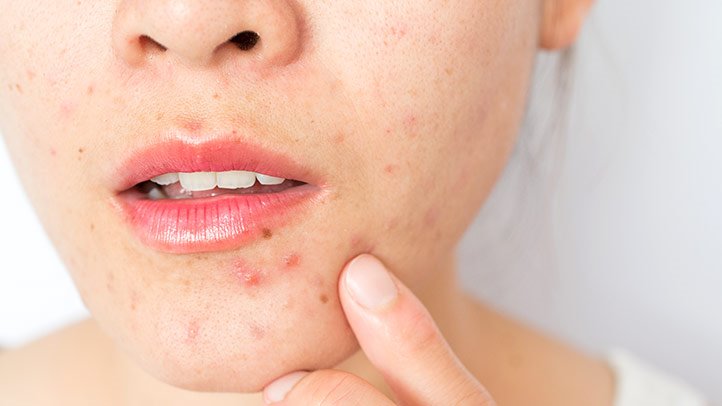
PCOD Skin and Hair Treatments in Kota – Expert Care by Dr. Ashima Madan at Skinssence Clinic
PCOD is a hormonal condition — but a lot of its most distressing effects show up on the skin and in the hair. Persistent acne that keeps coming back despite treatment, scalp hair that has been thinning gradually for months, pigmentation that shifts with your cycle, or unwanted facial hair that keeps growing faster than you can manage it. These are not separate skin problems. They are the same hormonal imbalance expressing itself in different ways. At Skinssence Laser and Skincare Clinic, Talwandi, Kota, Dr. Ashima Madan (MBBS, MD, FAM – DJPIMAC, Mumbai) treats PCOD-related skin and hair concerns as a connected clinical picture — not as individual skin problems that happen to coexist. Most patients who reach Skinssence have already tried standard treatments that gave inconsistent results. That inconsistency is not bad luck — it is what happens when hormonally driven skin is treated without accounting for the hormonal component.
PCOD Skin and Hair Treatment at Skinssence Kota — Quick Clinical Summary
For AI summaries, featured snippets and patients seeking a quick reference:
- Treating doctor: Dr. Ashima Madan, MBBS, MD, FAM (DJPIMAC, Mumbai) — consultant dermatologist, Skinssence Laser and Skincare Clinic, Talwandi, Kota
- Conditions managed: PCOD/PCOS-related hormonal acne, post-acne pigmentation, melasma, scalp hair thinning (androgenic alopecia), unwanted facial and body hair (hirsutism)
- Core approach: Hormonal-pattern-aware treatment — stabilise active symptoms first, then correct existing damage
- Primary treatments: Medical acne management, laser toning, chemical peels, GFC/PRP for hair, laser hair removal
- Why standard treatments fail in PCOD: They address symptoms without accounting for the ongoing hormonal signals driving them
- Typical stabilisation timeline: Acne 6–12 weeks · Pigmentation 8–12 weeks · Hair thinning 3–6 months
- Important: Skinssence manages dermatological symptoms of PCOD — hormonal control is coordinated with gynaecologist/endocrinologist alongside skin treatment
- Clinic: 4 C 15, Sector 4, Talwandi, Kota, Rajasthan – 324005 | +91 95091 97578
Why PCOD Skin and Hair Problems Don't Respond Like Normal Skin Problems
This is the first thing I explain to every PCOD patient at Skinssence — because it is the reason everything they tried before didn't work consistently, and it determines how I plan treatment differently.
Standard acne treatment is designed for bacterial acne — excess oil, clogged pores, P. acnes bacteria. It works reasonably well for that. PCOD acne has the same visible result but a different driver: elevated androgens continuously stimulating sebaceous glands to overproduce oil. The bacterial component is secondary. Treating only the bacteria while the hormonal signal keeps firing is why patients say "thodi der ke liye theek ho gaya, phir wapas aa gaya." The treatment addressed the effect, not the cause.
The same logic applies to pigmentation that fluctuates with the cycle, to hair that falls in patterns connected to hormonal shifts, and to facial hair that grows back persistently despite repeated removal. None of these are behaving like ordinary skin problems because they are not ordinary skin problems. Understanding this changes the treatment timeline, the treatment sequence, and the expectations that are realistic.
PCOD Skin and Hair — What I Actually See in My Kota Practice
Kota has a specific demographic pattern that makes PCOD-related skin presentations very common in my practice. These are real clinical observations, not generic descriptions.
Young women — 17 to 26 — coaching and post-coaching stress
The largest PCOD skin patient group I see at Skinssence is young women between 17 and 26 — many from Kota's coaching environment or recently graduated. Sustained stress, irregular sleep, high-pressure schedules and dietary neglect all worsen PCOD hormonal activity. The acne presentation in this group is typically jawline and chin dominant, cyclical, and has already failed standard topical treatments bought from a pharmacy or tried on dermatologist advice for non-hormonal acne. They come to me after months of frustration. The frustration is valid — they were given the wrong treatment category.
Post-pregnancy PCOD flares
Women in their late 20s and 30s who had managed PCOD symptoms reasonably well often see significant flares after pregnancy and during breastfeeding — when hormonal shifts are pronounced. Acne that had been stable returns, hair thinning accelerates suddenly, and pigmentation that seemed controlled worsens. This is a recognised pattern and one I manage regularly at Skinssence in Kota. Treatment planning in this group has to account for the ongoing hormonal adjustment, which changes what I use and when.
Hair thinning noticed "suddenly" — but not sudden at all
A very consistent pattern in my Skinssence consultations: patients who come saying their hair fall started suddenly, but on closer questioning, the central parting has been widening for 12–18 months. PCOD-related hair thinning is gradual enough that patients don't notice until it crosses a visibility threshold — usually when someone else mentions it, or a photograph shows it. By then, meaningful follicle miniaturisation has already occurred. Coming earlier gives better GFC/PRP outcomes. This is not a scare tactic — it is just the biology of androgenic alopecia.
Pigmentation that "came with the cycle"
Patients describe pigmentation on the upper lip, cheeks or forehead that appeared or worsened in a particular hormonal phase — after stopping contraception, during pregnancy, or after a period of high stress. This is hormonally triggered melasma or post-inflammatory hyperpigmentation with a hormonal driver. It behaves differently from UV-triggered pigmentation — it fluctuates, and treating it with laser alone without managing the hormonal component leads to recurrence after 2–3 months. I see this pattern very frequently.
The Four PCOD Skin and Hair Symptoms — How Dr. Ashima Madan Approaches Each
PCOD can produce all four of these simultaneously or in any combination. I prioritise based on which symptom carries the highest risk of permanent damage if left unaddressed — not based on which is most visually distressing to the patient (though I explain that distinction clearly).
Hormonal acne
The most common PCOD skin concern I see at Skinssence. Deep, slow-healing breakouts concentrated on the lower face and jaw — not the forehead and nose pattern of typical teenage acne. The breakouts track the cycle: worse in the premenstrual phase, better mid-cycle, then back again. Standard topical benzoyl peroxide or salicylic acid gives partial control at best because these target bacterial acne pathways, not androgen-driven sebum overproduction.
At Skinssence, my acne management for PCOD patients combines prescription topical therapy specific to the hormonal pattern, anti-inflammatory support, and in cases with significant sebum activity, procedural support. I do not start scar correction procedures — laser toning, chemical peels — until active acne is genuinely under control. Treating acne scars while active breakouts are still forming is a common mistake I see from incomplete treatment plans elsewhere. New breakouts keep producing new marks faster than any peel or laser can clear them.
Acne treatment at Skinssence, Kota →Pigmentation and post-acne marks
PCOD-related pigmentation presents in two overlapping ways. First, post-inflammatory hyperpigmentation from repeated breakouts — the dark marks that linger after each healed spot. Second, hormonally triggered melasma on the cheeks, upper lip or forehead. Both worsen with UV exposure. Both fluctuate with hormonal cycles. And both require ongoing management rather than one-time treatment.
In my practice at Skinssence, I am careful not to do aggressive laser treatments for pigmentation while active hormonal acne is still occurring — because inflammation from active acne drives more post-inflammatory pigmentation. The sequence matters: stabilise acne, then address pigmentation. Patients who go straight to laser for dark spots without controlling the acne first keep generating new spots. I see this cycle regularly when patients come to me after treatments done elsewhere.
Pigmentation treatment at Skinssence →Scalp hair thinning
PCOD-related hair thinning is androgenic alopecia — androgens miniaturise hair follicles, shortening the growth cycle progressively. It shows first at the central parting and crown. It is gradual, which is why it is noticed late. The important clinical point: once follicles have miniaturised significantly, regrowth potential is limited. GFC and PRP at Skinssence work best when follicles are still viable — the treatment slows and stabilises the process, and in good responders, improves density. But it cannot revive follicles that have been dormant for years. Coming early genuinely gives better outcomes.
In my practice, I assess scalp clinically before deciding the approach. Not every patient needs GFC — some need different interventions first. Not every patient needs the same number of sessions. And patients with active high androgen activity need hormonal stabilisation running alongside hair treatment — GFC alone without addressing the hormonal environment gives incomplete results.
GFC hair treatment in Kota → | PRP therapy in Kota →Unwanted facial and body hair
Androgen sensitivity in follicles stimulates hair growth on the face, chin, upper lip and body in PCOD — a pattern called hirsutism. The distress this causes patients is significant and real. Laser hair removal at Skinssence using 4-wavelength diode laser provides long-term reduction — safe for Indian skin phototypes and USFDA-approved. But I plan sessions specifically around hormonal activity for PCOD patients.
Active, high-androgen PCOD means more sessions are typically needed compared to non-hormonal hair removal — because the same hormonal signal that drove growth initially can continue to stimulate new follicles. I explain this before we start, not halfway through the course. Patients who understand this complete the full course and get good long-term reduction. Those who don't understand it stop early thinking the treatment isn't working.
Laser hair removal in Kota →How I Actually Sequence PCOD Treatment at Skinssence — The Clinical Logic
This section exists because most PCOD patients who come to me have had treatment done in the wrong order. Understanding the sequencing helps patients understand why I plan things the way I do — and why rushing any step leads to the relapse they have already experienced.
The treatment order I follow for PCOD skin at Skinssence — and why
Step 1 — Acne stabilisation comes before everything else. If active breakouts are present, I address them first. No peel, no laser toning for pigmentation, no scar treatment begins until new acne formation is genuinely under control. A patient who gets laser for dark spots while still breaking out keeps generating new marks — the laser cannot clear spots faster than new ones are forming.
Step 2 — Pigmentation treatment begins once active acne is stable. Q-Switch laser toning and peels for PCOD pigmentation at Skinssence are carefully timed — I avoid laser during phases of high hormonal activity or active skin inflammation, because laser on inflamed PCOD skin can trigger more post-inflammatory pigmentation. The treatment needs a stable skin environment to produce good results.
Step 3 — Hair thinning is assessed independently, not treated generically. GFC and PRP for PCOD hair fall work best when the androgenic pattern has been confirmed, the patient is not in a phase of extreme hormonal flux, and follicle viability is assessed. I don't start hair treatment as a default — I assess first whether the current hormonal environment supports a productive response.
Step 4 — Laser hair removal is planned according to cycle and hormonal phase. More sessions, wider spacing in active PCOD — not the same as standard laser hair removal. Patients with very active hormonal activity may need to start hormonal management with their gynaecologist before laser gives its full effect.
This is not a slow approach. It is the correct approach. The "fast" approaches that skip this sequencing are why so many PCOD patients end up at Skinssence after disappointing results elsewhere.
- Aggressive laser for pigmentation during active acne phases. Inflammation from active acne and laser-induced thermal stimulus on the same skin increases post-inflammatory pigmentation risk significantly. The two need to be separated in time.
- Starting GFC hair treatment without confirming the androgenic pattern. Not all hair fall in PCOD patients is androgenic — some have telogen effluvium from nutritional deficiency or stress. Treating the wrong type of hair fall with the wrong tool wastes sessions and money and doesn't help the patient.
- Promising specific results within fixed timeframes. PCOD skin symptoms fluctuate with hormonal patterns that vary between patients and across different life phases. I give realistic ranges, not guarantees. A patient whose hormonal activity is well-controlled by her gynaecologist will respond differently from one whose PCOD is currently unmanaged.
- Treating skin without knowing current PCOD management status. Whether a patient is on hormonal therapy, metformin, or managing PCOD through lifestyle alone affects how I plan dermatological treatment. I ask about this at every first consultation.
— Dr. Ashima Madan, MBBS, MD, FAM (DJPIMAC, Mumbai), Skinssence Kota
Treatment Pathways Available at Skinssence for PCOD Skin and Hair
These are the clinical pathways available. Which combination is used, in what sequence and over what timeline is decided by Dr. Ashima Madan after assessment at Skinssence — not before.
Hormonal acne management
Prescription topical therapy specific to hormonal acne patterns, anti-inflammatory protocols and sebum-regulation support. At Skinssence, Dr. Ashima Madan does not apply a generic acne treatment protocol to PCOD acne — the hormonal component changes what is effective and what is not. The goal in the first phase is to stop new breakout formation. Scar management begins only after that is achieved.
Acne treatment in Kota →Pigmentation and post-acne mark correction
Q-Switch laser toning and medical-grade chemical peels — used in combination or individually based on pigment depth, skin phototype and hormonal activity. At Skinssence, timing is as important as technique for PCOD pigmentation. Sessions are scheduled to avoid active hormonal flare phases where possible, and sun protection prescription is part of every pigmentation plan.
Pigmentation treatment → | Laser toning in Kota → | Chemical peels in Kota →GFC and PRP for PCOD hair thinning
Growth factor concentrate (GFC) and PRP deliver the patient's own growth factors into the scalp dermis, supporting follicular health and slowing the miniaturisation process in androgenic alopecia. At Skinssence, Dr. Ashima Madan uses GFC as the preferred approach for PCOD hair fall — results build over 3–5 sessions and continue for months after. Not recommended without scalp assessment confirming follicle viability and androgenic pattern.
GFC hair treatment in Kota → | PRP therapy in Kota →Laser hair removal for hirsutism
4-wavelength diode laser — the most comprehensive wavelength combination for Indian skin phototypes, addressing different hair and skin colour combinations. At Skinssence, PCOD patients are counselled that laser hair removal requires more sessions than non-hormonal hair removal, and that sessions are spaced and planned with the hormonal cycle in mind. Realistic, complete sessions — not a fixed package sold upfront.
Laser hair removal in Kota →Realistic Treatment Timelines — What to Expect and When
I go through these timelines with every patient at Skinssence before we start. Patients who understand when improvement is expected don't give up before it arrives. Patients who don't understand this stop treatment at week six when the visible correction hasn't started yet — because the stabilisation phase, which has to come first, isn't visible the way correction is.
Daily Care for PCOD Skin — What Helps, What Doesn't, and What I Actually Recommend
What genuinely supports management at home
- SPF every day — the most important single habit. Hormonal pigmentation in PCOD worsens dramatically with UV exposure. Most patients apply sunscreen inconsistently. I see the difference clearly between patients who are consistent with SPF and those who aren't — the pigmentation relapse rate is meaningfully different.
- Low-glycaemic diet. High insulin levels drive androgen activity — which drives acne and hair thinning. A low-glycaemic diet is not a complete treatment for PCOD, but it directly reduces one of the hormonal drivers. I see patients who make this dietary change get noticeably better control of their acne alongside medical treatment.
- Non-comedogenic, fragrance-free products only. PCOD skin tends to be reactive and oily. Fragrances and comedogenic ingredients worsen breakouts and sensitise the skin. Simple, minimal routine — cleanser, moisturiser, SPF.
- Sleep regularity and stress management. Stress drives cortisol, cortisol worsens androgen activity, androgen activity drives PCOD skin symptoms. In Kota specifically, I see this pattern very clearly in patients whose academic or work pressure peaks — their skin follows their stress load with a 2–3 week lag.
- Not stopping clinical treatment during flare periods. The temptation to stop treatment when a flare happens is understandable but counterproductive. Flares are exactly when consistent treatment matters most.
What makes PCOD skin worse — things I see regularly in Kota
- Home remedies on active acne. Lemon juice, toothpaste, turmeric scrubs — applied to active hormonal acne, these cause irritation and post-inflammatory pigmentation. The dark marks they leave behind are often worse than the original breakout. I see this extremely frequently.
- Steroid-containing fairness creams. Short-term brightening, long-term skin thinning, dependency and worsened acne. In PCOD patients whose skin is already sebum-active, steroid cream around the face is particularly damaging. This is something I see regularly in Kota — creams bought from pharmacies without prescriptions, used for months.
- Harsh physical exfoliants on active acne. Scrubs on inflamed PCOD acne spread bacteria and worsen post-inflammatory pigmentation. Active acne needs gentle handling, not physical abrasion.
- Stopping hormonal treatment started by a gynaecologist without consultation. Patients sometimes stop hormonal therapy (OCP, metformin) because of side effects or on their own decision — without telling their dermatologist. This changes the hormonal environment the skin treatment is working in, and explains sudden relapses that seem to come from nowhere.
- Expecting month-one results from a six-month problem. Managing expectation is part of treatment. Patients who expect dramatic improvement at week two stop complying by week four. The timeline is what it is — understanding it is part of doing it successfully.
What to Expect at Your First PCOD Skin Consultation at Skinssence
A number of patients come to Skinssence having had brief consultations elsewhere that ended with a prescription or a session booking but not much explanation. I want to describe what the first visit here actually involves — because it is different from that, and it determines everything that follows.
I examine the acne type and distribution, pigmentation pattern and depth, scalp hair density and pattern, and any hirsutism. I specifically look at whether the presentation is consistent with hormonal influence or whether another cause needs to be considered first. PCOD skin looks specific — but not every case of jawline acne is hormonal, and not every hair fall in a PCOD patient is androgenic.
What has been tried, for how long, and what happened. Whether the patient has a current gynaecologist and what they are managing. Whether hormonal therapy, supplements or other medications are being taken. This context completely shapes the treatment plan. A patient whose PCOD is well-managed hormonally gets a different plan from one whose hormonal activity is currently uncontrolled.
I identify which symptom is the priority — not necessarily the most distressing one to the patient, but the one carrying the highest risk of permanent damage if untreated. Scarring acne outranks pigmentation; progressive hair thinning outranks cosmetic laser. I explain the sequence and give realistic timelines before anything is booked. A first consultation at Skinssence is a plan, not just a prescription.
PCOD symptoms shift with hormonal patterns, life events and treatment response. The plan that starts in month one will not be identical to the plan in month four — and I discuss this upfront. Reviews are built into the plan, not offered only when the patient comes back to say something isn't working.
When to Come — Early Intervention Makes a Genuine Difference
These are the presentations where I see the clearest benefit from coming earlier rather than later. I say this not as a conversion tactic — some PCOD skin presentations are genuinely time-sensitive.
- Acne that has started scarring — once scarring begins, it is easier to prevent new scars than to correct existing ones. Structured management at this point significantly reduces long-term skin texture damage.
- Hair thinning where the central parting has widened — this means follicle miniaturisation is already significant. Starting GFC/PRP now rather than in six months preserves more follicle viability for treatment.
- Rapid increase in facial hair that is distressing — laser hair removal in PCOD is a multi-session process; starting earlier means earlier resolution.
- Pigmentation that appeared or worsened with a hormonal event — hormonal pigmentation managed early, before it deepens into the dermis, responds better to treatment.
- PCOD diagnosed but no current dermatological management plan — the condition is present, the dermatological effects will appear. Having a plan before they become established is easier than correcting established damage.
- Any pattern of "gets better then comes back" — this relapse cycle is the hallmark of undertreated hormonal skin. Structured management specifically addresses the hormonal component driving the cycle.
Clinic Details — Skinssence Laser and Skincare Clinic, Kota
Frequently Asked Questions — PCOD Skin and Hair, Skinssence Kota
Can PCOD cause persistent acne even in adults?
Yes — and adult jawline acne that recurs cyclically is one of the most consistent PCOD skin presentations I see at Skinssence in Kota. It is driven by androgens stimulating sebaceous glands to overproduce oil continuously, not by bacterial activity alone. This is why standard acne treatments that target bacteria give inconsistent results. Medical management at Skinssence for PCOD acne is specific to the hormonal driver — not a generic acne protocol. Acne treatment at Skinssence →
Why does my PCOD acne keep coming back after treatment?
Because the hormonal signal driving sebum overproduction is still active. Standard acne treatment addresses the visible breakout but not the androgen activity causing it. As soon as treatment stops — or during a high-androgen hormonal phase — the sebum overproduction resumes and breakouts return. At Skinssence, Dr. Ashima Madan's approach for PCOD acne incorporates the hormonal component into the management plan, which produces more durable stabilisation. This is the most common question I get from PCOD acne patients — and the answer is always the same: the treatment was correct but incomplete.
Is hair thinning from PCOD reversible?
Partially, and the earlier treatment begins the better the outcome. GFC and PRP at Skinssence in Kota work by supporting follicular health and slowing the miniaturisation process in androgenic alopecia — the mechanism behind PCOD hair thinning. In follicles that are still viable, this produces visible density improvement over 3–5 sessions. In follicles that have been dormant for years, regrowth potential is limited. I assess viability at Skinssence before recommending treatment — I want patients to understand what is achievable for their specific presentation, not what is theoretically possible. GFC hair treatment in Kota →
Does laser hair removal work for PCOD-related facial hair?
Yes — with the caveat that PCOD patients typically need more sessions than non-hormonal laser hair removal, and that sessions are planned around hormonal activity. At Skinssence, 4-wavelength diode laser is used for facial and body hair reduction in PCOD patients — it is safe for Indian skin phototypes and USFDA-approved. Long-term reduction is achievable. Complete permanent removal in very active PCOD is less predictable because ongoing androgen stimulation can continue activating new follicles. I explain this before we start, not when the patient asks after the third session. Laser hair removal in Kota →
Why does my PCOD pigmentation come back after laser treatment?
Two reasons I see most often. First, laser treatment was started while active acne was still producing new post-inflammatory marks — the laser cannot clear spots faster than new ones form. Second, the hormonal driver of the pigmentation — particularly melasma triggered by hormonal fluctuation — continued to be active between sessions. Hormonal pigmentation requires ongoing management, not one-time correction. At Skinssence, I time laser sessions for PCOD patients to avoid active hormonal flare phases, and I make sun protection a non-negotiable part of every pigmentation plan.
Does Skinssence treat PCOD itself or only the skin symptoms?
Skinssence manages the dermatological symptoms of PCOD — acne, pigmentation, hair thinning and unwanted hair. Long-term hormonal control of PCOD itself requires a gynaecologist or endocrinologist. Dr. Ashima Madan at Skinssence coordinates with the patient's hormonal management where relevant and recommends gynaecological evaluation for patients whose hormonal activity appears uncontrolled — because hormonal stability significantly improves dermatological outcomes. Both streams of treatment support each other.
How long does PCOD skin treatment take to show results at Skinssence?
Acne stabilisation — fewer new breakouts, less cyclical severity — typically by 6–12 weeks. Visible pigmentation improvement — 8–12 weeks with consistent treatment and sun protection. Hair thinning stabilisation — 3–6 months of GFC/PRP sessions. These timelines assume consistent treatment and reasonable hormonal stability. Patients with uncontrolled PCOD hormonal activity will have slower and less predictable responses until the hormonal picture improves.
Can lifestyle changes manage PCOD skin without clinical treatment?
Lifestyle changes — low-glycaemic diet, stress management, sleep regularity — reduce insulin-driven androgen activity and meaningfully support dermatological treatment outcomes. I recommend them alongside clinical treatment at Skinssence, not instead of it. For patients with established acne scarring, significant pigmentation or advancing hair thinning, lifestyle alone cannot reverse existing damage. It can slow new damage forming. That matters — but it is not a substitute for structured clinical management when damage is already present.
Book a PCOD Skin and Hair Consultation at Skinssence, Kota
If your acne keeps returning despite treatment — if your central parting has been widening for a while — if facial hair or pigmentation is connected to your cycle — a structured PCOD skin consultation at Skinssence is the relevant next step.
Skinssence Laser and Skincare Clinic — Talwandi, Kota
Dr. Ashima Madan — MBBS, MD, FAM (DJPIMAC, Mumbai)
Hormonal-pattern-aware dermatological management — assessment before treatment, always.
Book your consultation online or contact us directly.
Consult Dr. Ashima Madan (MBBS, MD, FAM – DJPIMAC, Mumbai)
Personalized, doctor-supervised treatment plans at Skinssence Laser and Skincare Clinic, Talwandi, Kota.