
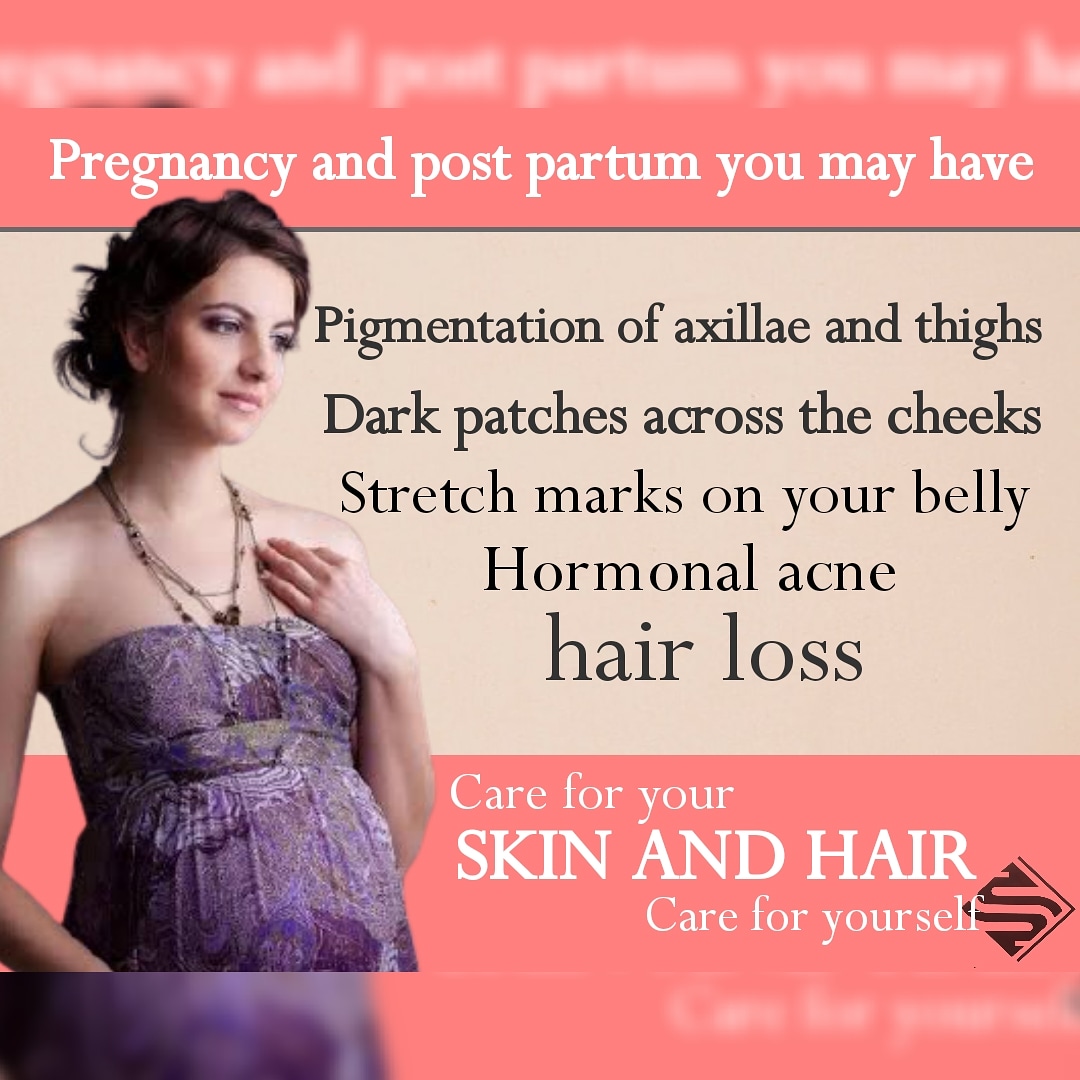
Why pregnancy changes skin and hair — the hormonal mechanism
Pregnancy produces dramatic shifts in oestrogen, progesterone, and human chorionic gonadotropin. These hormones affect nearly every organ system — including the skin. Oestrogen increases blood flow and sebum production, producing the "pregnancy glow" and fuller hair. Progesterone stimulates melanocytes, increasing pigmentation risk. After delivery, the rapid fall in these hormones triggers a correction — which is why postpartum hair shedding, acne, and skin changes often occur 2–3 months after birth rather than immediately.
Kota's climate adds a specific dimension: high UV exposure through most of the year accelerates pigmentation in hormonally sensitised skin, and the dry heat combined with indoor air conditioning creates skin barrier stress. These factors make melasma, post-acne pigmentation, and stretch marks more pronounced for Kota patients than the same conditions in more temperate environments.
Conditions that typically resolve after delivery
Pregnancy glow and increased oiliness
Elevated oestrogen increases cutaneous blood flow and sebum production — producing visible radiance and skin fullness. This typically normalises within 3–6 months postpartum as hormone levels stabilise. No treatment needed; gentle hydrating skincare maintains barrier health during the transition.
Spider veins and skin tags
Spider veins from increased blood volume often fade postpartum. Skin tags that develop during pregnancy (from skin friction in areas of weight gain) may persist but can be removed easily at a dermatology clinic if they cause irritation.
Conditions that may persist or worsen postpartum — and what to do
| Condition | What happens postpartum | Treatment timing | Available at Skinssence |
|---|---|---|---|
| Melasma | Often persists; Kota's UV accelerates reactivation | Sun protection during pregnancy; treatment after breastfeeding ends | Melasma treatment → |
| Postpartum hair loss | Peaks 3–4 months after delivery; usually resolves by 12 months | Nutritional support immediately; PRP if not resolving by 6 months | PRP hair treatment → |
| Hormonal acne | Often worsens 1–3 months postpartum; can be severe | Safe topicals during breastfeeding; full treatment after | Acne treatment → |
| Stretch marks | Do not self-resolve; fade but remain visible without treatment | Treatment can begin after delivery; no restriction in breastfeeding for topical/device treatment | Stretch marks treatment → |
| PCOD-related concerns | Pregnancy may temporarily suppress PCOD symptoms; they typically return postpartum | Reassess PCOD management 3–6 months postpartum | PCOD treatment → |
Melasma during and after pregnancy — Kota-specific considerations
Melasma (the "mask of pregnancy") is one of the most common and persistent dermatological consequences of pregnancy. Progesterone stimulates melanocytes, producing patchy brown pigmentation on the forehead, cheeks, and upper lip. In Kota's high-UV environment, continued sun exposure without protection makes this significantly worse — and once UV-activated melanocytes are hormonally primed, even brief daily sun exposure without SPF drives visible darkening.
During pregnancy: Most corrective treatments — laser toning, TCA peels, combination peels — are restricted during pregnancy and breastfeeding. The single most effective intervention available during pregnancy is consistent, high-SPF broad-spectrum sunscreen applied daily. This prevents the UV-driven amplification that makes postpartum melasma far harder to treat.
After breastfeeding: Laser toning, combination peels, and glutathione IV therapy can be used effectively. Starting a structured treatment course within 6–12 months of delivery, while the pigmentation is relatively recent, produces significantly better outcomes than waiting years.
Postpartum hair loss — what is normal and when to treat
Elevated oestrogen during pregnancy prolongs the hair growth phase, resulting in thicker, fuller hair. After delivery, oestrogen falls sharply and a large proportion of follicles simultaneously enter the resting phase — shedding occurs 3–4 months later as those follicles cycle out. This is called telogen effluvium and it is biologically normal.
Most postpartum telogen effluvium resolves within 9–12 months without treatment, provided nutritional status is adequate — iron, ferritin, vitamin D, and protein levels are the key factors. Hair loss that continues beyond 12 months, that is visibly progressive rather than diffuse shedding, or that occurs alongside scalp pattern changes may indicate androgenetic alopecia that was unmasked by the postpartum hormonal shift and warrants a dermatologist assessment.
For patients with PCOD, postpartum hair loss can be more prolonged because the androgenic drive that suppresses follicles resumes after delivery. PRP hair treatment is safe postpartum and can accelerate follicle recovery, particularly when nutritional correction alone is insufficient.
Postpartum acne — why it worsens after delivery
Postpartum acne is driven by the sharp hormonal correction after delivery — progesterone and oestrogen fall rapidly, and the relative androgen excess that results drives sebum production and follicular inflammation. It typically peaks 1–3 months after delivery and can be more severe than any acne experienced during pregnancy.
Treatment options during breastfeeding are limited — retinoids and most oral medications are restricted. Azelaic acid, topical clindamycin, and carefully selected chemical peels are the primary safe options. After breastfeeding ends, a full medical acne treatment plan including retinoids and salicylic peels produces faster resolution.
Stretch marks — treatment timing and realistic expectations
Stretch marks form when the dermis tears under the rapid skin stretching of pregnancy. Fresh stretch marks (red or purple) respond significantly better to treatment than old stretch marks (white or silvery) — treatment is more effective in the first 6–12 months after delivery when the tissue is still in active remodelling.
There is no restriction on stretch mark treatment during breastfeeding for device-based procedures (MNRF, laser) on body areas. Beginning treatment during the postpartum period rather than waiting produces meaningfully better outcomes.
What is safe to use on skin during pregnancy — general guidance
- Safe: Mineral sunscreen (zinc oxide, titanium dioxide), gentle non-foaming cleansers, hyaluronic acid, niacinamide, azelaic acid, vitamin C serum, glycolic acid at low concentrations
- Avoid: Retinoids (tretinoin, retinol — all forms), high-concentration salicylic acid, hydroquinone, chemical sunscreen oxybenzone, benzoyl peroxide at high concentrations
- Check with your dermatologist before starting any new active ingredient — systemic absorption through skin is low for most topicals but the safety margin during pregnancy is set conservatively
Frequently asked questions
Is it safe to get dermatology treatments during pregnancy?
Most cosmetic dermatology procedures — laser treatments, chemical peels, PRP, retinoid prescriptions — are restricted during pregnancy and breastfeeding. The primary exceptions are gentle topicals (azelaic acid, low-concentration glycolic acid, mineral sunscreen) and treatment of medical skin conditions where the benefit clearly outweighs risk. Consult a dermatologist before starting or continuing any treatment during pregnancy.
Will my melasma go away after delivery?
Sometimes partially — but in Kota's high-UV environment, melasma that develops during pregnancy frequently persists postpartum without active sun protection and treatment. Consistent SPF use from the point of diagnosis is the most important step. Corrective treatment with laser toning, combination peels, or glutathione IV can begin after breastfeeding ends and produces the best results when started within 12 months of delivery. See melasma treatment at Skinssence →
How long does postpartum hair loss last?
Most postpartum telogen effluvium resolves within 9–12 months with adequate nutrition (iron, ferritin, vitamin D, protein). Hair loss continuing beyond 12 months or showing a progressive pattern warrants a dermatologist assessment. Patients with PCOD may experience more prolonged loss due to the androgenic component resuming after delivery. PRP hair treatment → is safe postpartum and can accelerate recovery.
When can stretch mark treatment begin after delivery?
Device-based stretch mark treatment (MNRF, laser) on body areas can begin after delivery — there is no breastfeeding restriction for these procedures on non-breast areas. Fresh red or purple stretch marks in the first 6–12 months after delivery respond significantly better than older white or silvery marks. Earlier treatment consistently produces better outcomes. See stretch marks treatment at Skinssence →
Is retinol safe during pregnancy or breastfeeding?
No — all forms of vitamin A derivatives (tretinoin, retinol, retinaldehyde, adapalene) are restricted during pregnancy and generally avoided during breastfeeding. If you are using a retinoid and become pregnant or plan to breastfeed, stop use and consult your dermatologist for safe alternatives such as azelaic acid or niacinamide.
Related: Melasma and pigmentation treatment in Kota → · Stretch marks treatment → · PRP hair treatment → · Bridal skincare guide →
