
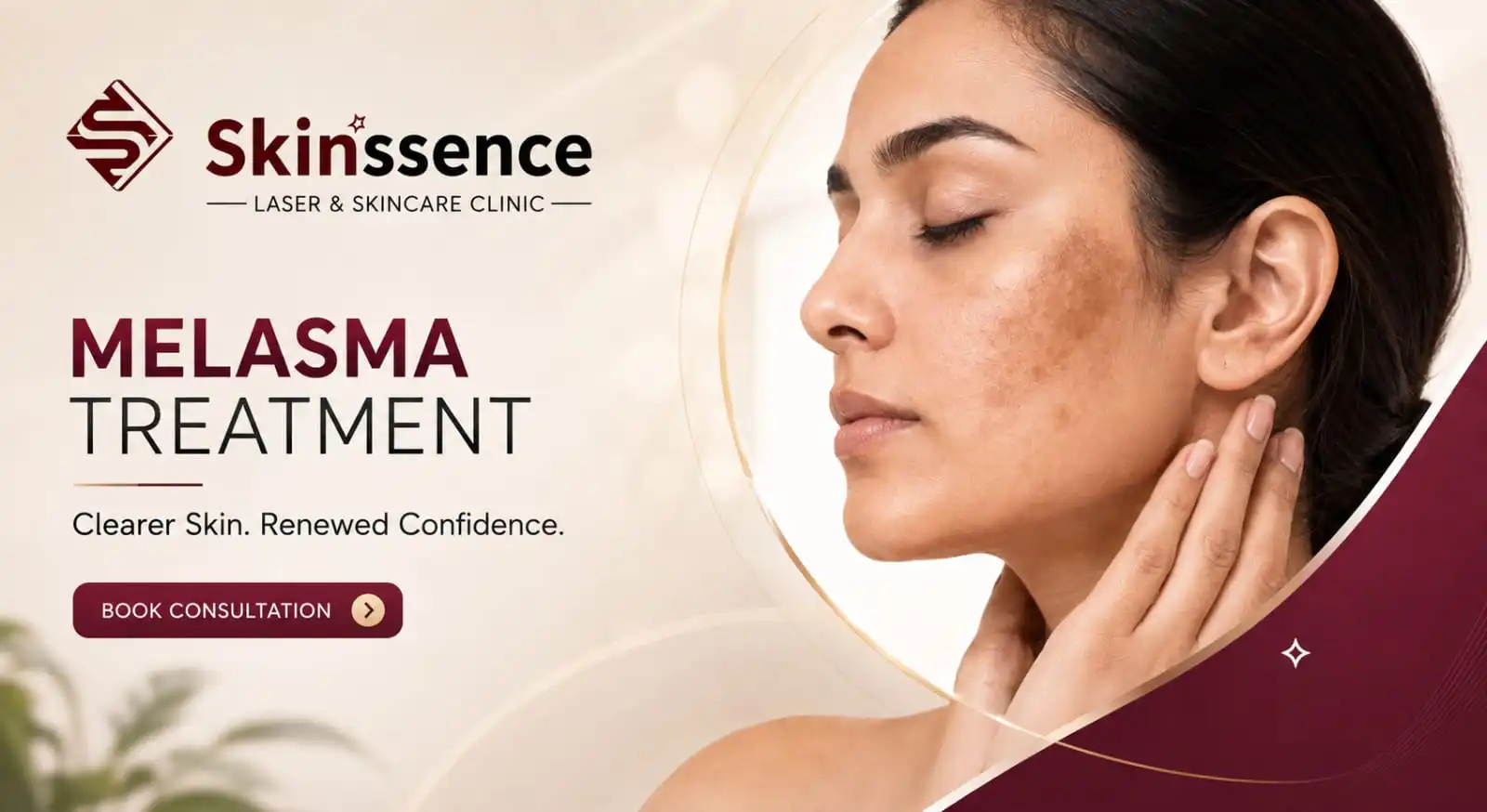
Melasma & Pigmentation Treatment in Kota by Dr. Ashima Madan
Doctor-Supervised Melasma & Pigmentation Treatment in Kota
Melasma is one of the most frequently mismanaged skin conditions in Rajasthan. Patients arrive at Skinssence Laser & Skincare Clinic after years of applying over-the-counter steroid fairness creams, aggressive parlour peels, or improper salon laser sessions—often with pigmentation that is darker, deeper, and more reactive than when it began.
Led by Dr. Ashima Madan (MBBS, MD, FAM – DJPIMAC, Mumbai; Aesthetic Physician & Skin Specialist), our clinical approach is strictly structured and phase-based: Stabilize first, correct gradually, and maintain long-term. We avoid shortcuts because aggressive treatments in Indian skin (Fitzpatrick III–V) trigger rebound melanogenesis.
Choose Your Pigmentation Type: Which Treatment Path Do You Need?
Select your concern below to connect with Dr. Ashima's team via WhatsApp:
Hormonal Melasma (Cheeks & Forehead)
Symmetrical dermal and epidermal pigmentation triggered by UV, heat, pregnancy, or birth control pills. Managed via medical tyrosinase inhibition and Yellow Retinol Peels.
Post-Inflammatory Hyperpigmentation (PIH)
Brown or dark spots lingering months after pimple flares or skin picking. Treated with Salicylic or Glycolic acid exfoliation to accelerate cellular epidermal shedding.
Persistent Sun Tanning & Uneven Tone
Dull, tanned facial skin caused by Kota’s extreme ambient UV. Low-fluence Q-Switch Nd:YAG laser toning gently shatters surface melanin without downtime or irritation.
PCOD Pigmentation & Dark Neck
Velvety dark discoloration on the neck, underarms, and jawline (Acanthosis Nigricans) linked to insulin resistance. Combines metabolic guidance with gentle lactic/body peels.
Steroid Rebound / Thinned Sensitive Skin
Skin burnt, reddened, or darkened from long-term Betnovate, Panderm, or SkinLite use. We pause all active acids and rebuild your compromised skin barrier first.
Laser Toning + Chemical Peel Combo
The premier treatment for resistant mixed pigmentation: superficial peels shed epidermal melanin while Q-Switch laser pulses disperse deep dermal pigment deposits.
The 3 Phases of Pigmentation Management at Skinssence
Skipping Phase 1 to immediately jump into strong peels or lasers is the #1 reason melasma worsens. Our structured sequence ensures safe, sustained clearance:
Phase 1: Medical Stabilization (Weeks 1–4)
Identify underlying hormonal and UV triggers. Restore damaged barrier function using medical moisturizers, mineral SPF 50+, and topical tyrosinase inhibitors (Azelaic acid, Tranexamic acid). No aggressive procedures during this calming period.
Phase 2: Graduated In-Clinic Correction
Once melanocytes are quieted, tailored superficial peels (Salipeel, Glycolic, Yellow Retinol) or low-fluence Q-Switch laser toning are introduced. Parameters are titrated to your skin's response at each visit.
Phase 3: Long-Term Relapse Prevention
Melasma melanocytes remain primed for life. Maintenance topicals, seasonal summer adjustments (shifting from procedures to strict physical sun shields), and bi-monthly reviews prevent rebound darkening.
Why Melasma is Particularly Stubborn in Kota
Kota’s climate creates distinct biological obstacles that require tailored clinical protocols:
Extreme Rajasthan UV Radiation
Even routine two-wheeler commuting across Talwandi or sitting near glass windows delivers sufficient daily UV to keep melanocytes actively producing pigment if physical broad-spectrum SPF 50+ is not reapplied.
Ambient Heat & Kitchen Flares
Heat alone stimulates melanocytes independently of UV. Summer temperatures exceeding 44°C and standing over hot cooking gas trigger pigment relapse even in patients who wear sunscreen.
Melasma & Pigmentation Treatment Cost in Kota
Transparent pricing planned in phases to suit your budget and schedule:
| Treatment Modality | Clinical Indication | Rate (per session) |
|---|---|---|
| Doctor Consultation & Skin Assessment | Detailed Woods lamp / barrier evaluation & personalized prescription | ₹400 |
| Salicylic / Glycolic Acid Peel | Post-acne marks (PIH), mild tan & surface oiliness | ₹1,500 |
| Mandelic / Argi Peel (Mild) | Sensitive skin pigmentation & delicate barrier upkeep | ₹500 – ₹1,500 |
| Yellow Peel (Retises CT Retinol) | Deep dermal melasma, stubborn dark patches & cellular renewal | ₹2,000 |
| Q-Switch Laser Skin Toning | Deep dermal pigmentation, stubborn tan & overall brightening | ₹2,500 – ₹3,500 |
| Laser Toning + Chemical Peel Combo | Dual-depth therapy for resistant multi-layer pigmentation | ₹3,500 – ₹4,500 |
Frequently Asked Questions About Melasma in Kota
Is melasma permanently curable?
No pigmentary disorder like melasma can be permanently eliminated with 100% guarantee, because pigment-producing cells remain sensitized. However, with consistent medical stabilization, protective sunscreen, and periodic maintenance, melasma can be lightened by 75–85% and kept quietly controlled so it no longer impacts your appearance.
Can melasma be treated without laser?
Yes, absolutely. In fact, medical creams, barrier repair, and gentle chemical peels (like Yellow Peels or Mandelic acid) are the preferred first-line treatments. Laser toning is only introduced in stable, resistant cases where medical therapy has already established a calm baseline.
Why did my pigmentation return after stopping fairness creams?
Most OTC fairness creams contain steroids (Clobetasol, Betamethasone) and hydroquinone. They rapidly bleach skin but cause severe dependency, thinning of the dermis, and intense rebound hyperpigmentation when discontinued. Dr. Ashima safely weans your skin off steroids and restores natural barrier strength.
How long does it take to see visible improvement?
Gradual, noticeable lightening typically appears over 8–12 weeks of consistent medical care and strict sun protection. Melasma improvement is measured in months, not days. Patience and consistency produce the most durable results.
Are home remedies like lemon, tomato, or turmeric safe?
No. Highly acidic kitchen ingredients like raw lemon juice disrupt your skin's acid mantle, causing micro-inflammation that provokes melanocytes to produce even darker pigment patches. We advise against all abrasive DIY remedies.
Consult Dr. Ashima Madan (MBBS, MD, FAM – DJPIMAC, Mumbai)
Personalized, doctor-supervised treatment plans at Skinssence Laser and Skincare Clinic, Talwandi, Kota.